

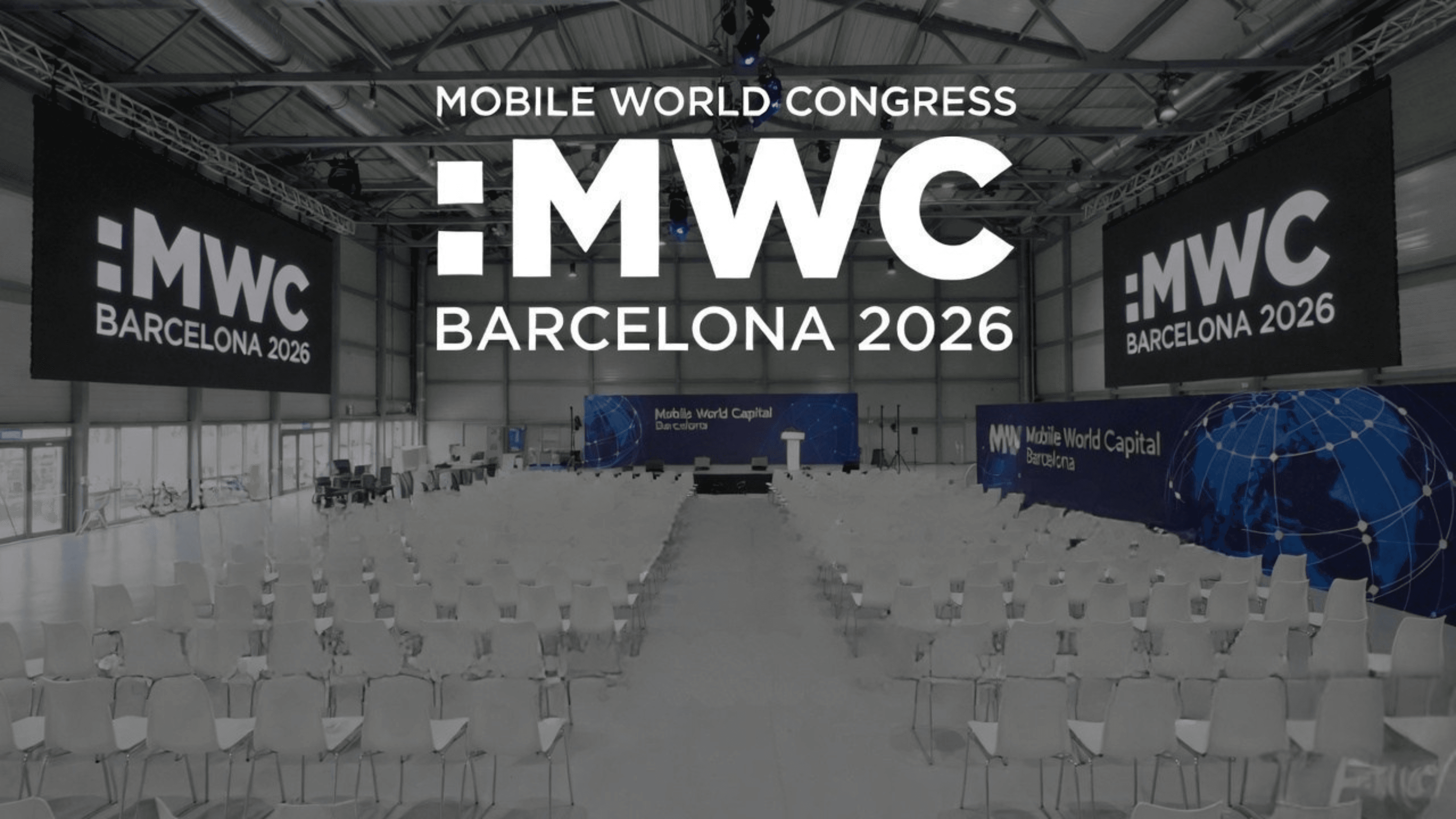
MWC Barcelona 2026 was not primarily a telecommunications conference. It was an architecture briefing for anyone building AI-native products or providing AI development services. The signals from the event floor and the keynotes, read together, describe a shift in the infrastructure available to AI developers, one that compresses delivery timelines and changes the economics of what is buildable at the edge.
Three signals dominated. Each has direct implications for AI development strategy decisions being made now.
Signal 1: AI at the Network Edge From Centralized to Distributed
The headline demonstration was not a device. It was infrastructure: on-device AI that does not require a round-trip to a data centre. Models that route to device silicon first and cloud second not as a fallback for connectivity gaps, but as the default architecture for latency-sensitive use cases.
The developer implication is direct. Processing sensitive data locally (healthcare records, financial decisions, industrial sensor streams) has historically required either accepting cloud latency or building expensive custom infrastructure. Deployment of edge AI on 5G-native silicon closes that gap. Multi-cloud AI orchestration that used to require 6–12 month integration tracks is now being demonstrated on interoperable frameworks. GSMA's 2026 intelligence report tracks enterprise private network deployments that underpin these capabilities across global markets.
The architecture decision this forces: any AI product built in 2026 for a latency-sensitive or data-privacy-sensitive use case should be scoped for edge-first deployment, not cloud-first deployment with edge as a retrofit. The retrofitting cost is high; the design decision cost is near zero.
Signal 2: Network APIs as an AI Development Surface
The second signal was the commercial maturation of network APIs. Telecoms exposing standardized APIs location, quality-on-demand, device status, congestion monitoring as primitives that AI applications can call directly represents a significant expansion of what is buildable without custom network integration work.
For AI developers, this means connectivity-aware applications that were previously only accessible to organizations with direct telco relationships are now within reach through standard API calls. A logistics AI that adjusts routing based on real-time network congestion data. A healthcare monitoring app that triggers escalation based on connectivity quality rather than only biometric signals. These are not speculative; they are on the MWC 2026 demo floor.
The development implication: network APIs belong on the integration surface assessment for any AI product operating in AI-native networks, mobile, IoT, or field-service contexts the same assessment that would already cover CRM, ERP, and cloud APIs.
Signal 3: Multi-Agent Orchestration at Production Scale
The third signal was the most consequential for enterprise AI strategy: demonstrations of multi-agent systems coordinating across tasks in real time, not as lab research but as commercially deployed systems. The shift to agentic ai software development in production is the defining architectural transition of 2026, and MWC 2026 confirmed it is operational not aspirational. Gartner's 2026 research estimates that 40% of enterprise applications will embed agentic AI by the end of 2026.
What This Means for Your AI Development Strategy in 2026
Audit for edge readiness before scoping cloud architecture. If your use case is latency-sensitive, data-privacy-constrained, or field-deployed, the MWC 2026 demonstrations confirm edge-first architecture is viable at production scale for modern ai product development. Design for it now.
Add network APIs to your integration surface assessment. Location, quality-on-demand, and device status APIs are now commercially available through standard developer programs. If your product operates in mobile or IoT contexts, they belong on the integration map from day one.
Plan for multi-agent architecture, even if you start with a single agent. A single well-scoped agent that delivers results is the right starting point for agentic ai development. An architecture that cannot accommodate a second agent when the first succeeds is the wrong starting point. Design the orchestration layer before you need it.
Move faster, not more cautiously. Every signal at MWC 2026 indicated acceleration, not consolidation. The window for first-mover advantage on edge AI, network API integration, and app modernization through agentic orchestration is shorter than most AI strategies currently assume.
How Chirpn Is Responding to the MWC 2026 Architecture Signals
As a leading ai development company, Chirpn's Google Cloud Partner status covering Vertex AI, AgentSpace, Agent Assist, and Gemini means the infrastructure demonstrated at MWC 2026 is already in our production delivery stack for ai software development. AutoPATH is already structured for multi-agent orchestration. The edge-AI and network-API signals from MWC 2026 are integration surface expansions, not architectural restarts, for clients building on this foundation.
The 45–60 day delivery window that AutoPATH provides is directly relevant to the "move faster" implication above. The firms that will capitalize on the MWC 2026 architecture signals are the ones that can go from strategic decision to production deployment within that window, not within a quarter or a year.
Talk to Chirpn about your 2026 AI architecture chirpn.com/contact-us/
Frequently Asked Questions
What were the key AI signals at MWC Barcelona 2026?
Three: AI at the network edge (on-device processing at production scale, reducing latency and data-privacy constraints); network APIs as an AI development surface (telecoms exposing standardized APIs that AI applications can call directly); and multi-agent orchestration at production scale (multi-agent systems coordinating across tasks in commercial deployments, not lab research). Together they describe a shift in the infrastructure available to AI developers, one that compresses delivery timelines and changes what is buildable.
What does MWC 2026 mean for enterprise AI strategy?
Four implications: audit for edge readiness before scoping cloud architecture; add network APIs to integration surface assessments for mobile and IoT use cases; plan multi-agent architecture even if starting with a single agent; and move faster. Every signal at MWC 2026 indicated acceleration. The window for first-mover advantage is shorter than most AI strategies currently assume.
How quickly can an AI product respond to the MWC 2026 signals?
With an AI-native delivery partner and a productized engagement model, a production-ready response to a specific MWC 2026 signal, an edge-AI prototype, a network-API integration, or a first agentic deployment is achievable in 45–60 days. The constraint is not the technology; it is the delivery architecture.